Understanding SPD Failure Modes: Open-Circuit vs. Short-Circuit and Their Impact on System Protection
Frequently Asked Questions
What are the two main failure modes of SPDs?
The two main failure modes are open-circuit and short-circuit.
What causes open-circuit failure in SPDs?
Open-circuit failure is typically caused by natural ageing, thermal protection mechanisms, or electrode wear in spark gaps.
Why is open-circuit failure hard to detect?
Open-circuit failure often goes unnoticed because the SPD becomes inoperative without immediate signs, leaving the system unprotected.
What can cause short-circuit failure in SPDs?
Short-circuit failure can be caused by sustained abnormal over-voltage (TOV), faults in the distribution system, or surges with unexpected energy levels.
How does the IEC 61643-11 standard address SPD failure modes?
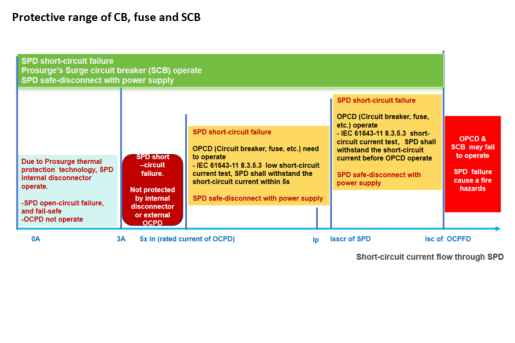
The standard mandates that SPDs must have disconnectors (internal, external, or both) and status indicators to ensure safe operation and indicate failure.
What is the role of overcurrent protective devices with SPDs?
External overcurrent protective devices like fuses or circuit-breakers act as backup protection to interrupt short-circuit current and prevent fire hazards.